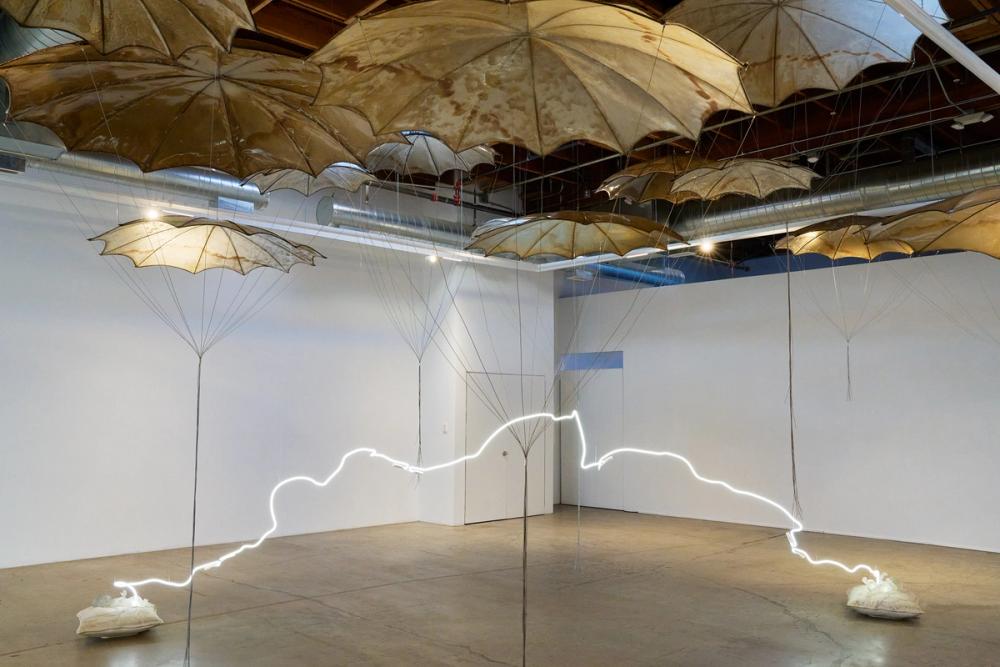
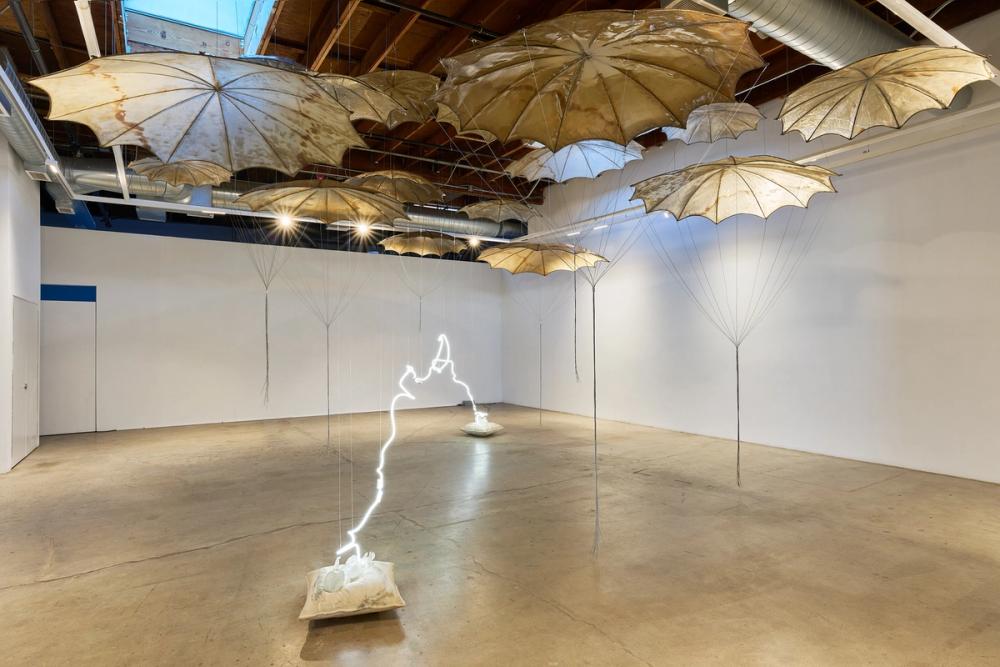
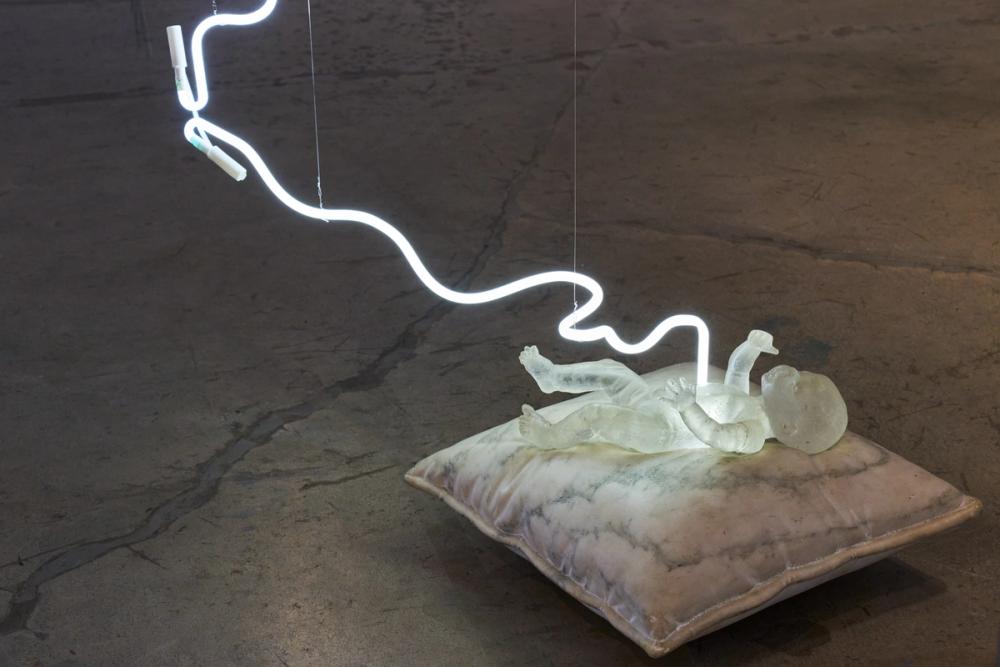
Murmurs is pleased to present Terranova Redux, an installation by Marsha Pels revisiting her pivotal 1995 Sculpture Center exhibition Terranova, a work that plumbed the depths of vulnerability, protection, and survival through archetypal imagery and immersive, enveloping space. Originally conceived in response to the catastrophic 1993 Iowa floods, the installation featured suspended parachutes, a 25 foot argon-mercury umbilical cord, and infant forms cast in crystal resting on carved marble pillows — conjuring themes of birth, rescue, and the precarious threshold between safety and peril. Opening Saturday, March 21, 2026, Terranova Redux reactivates these enduring concepts for the present moment, meditating on resilience, rebirth, and the human condition within a broader cosmic and ecological landscape — its resonances sharpened to new urgency in the wake of the 2025 LA fires.
Over a month in residence at the Sculpture Center, Pels conceived Terranova as a vast, site-specific environment. She was the last artist to exhibit at the institution’s original location, a carriage house on East 69th Street, and she regards the work as the fullest expression of her artistic vision. Since the 1970s, Pels had been tracing the relationship between sculptural object and landscape through large-scale steel and bronze forms that recalled shelters and vessels adrift. Following the tragic death of her close friend Ana Mendieta, Pels’ practice shifted, moving toward themes more overtly attuned to the feminine. Having long mastered metalworking and bronze casting — particularly the demanding lost-wax process — she began to extend her command into new materials and perspectives.
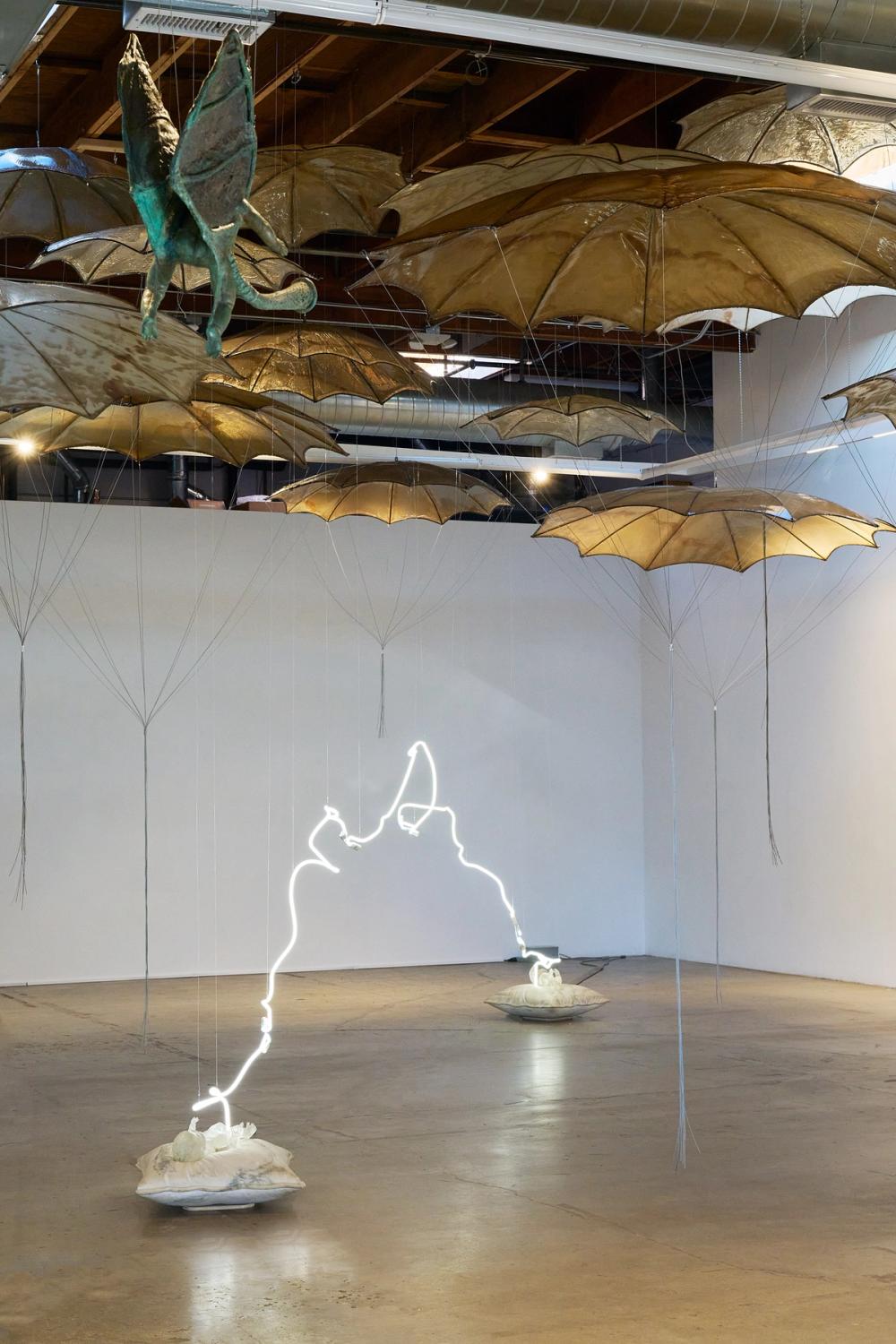
Terranova was born of disaster, both collective and intimate. The 1993 flooding of the Mississippi and Missouri rivers devastated Iowa, where Pels was living and teaching. She recalls the foundry of her college submerged in floodwater laced with chemicals from the sand-casting process, a toxic compound so corrosive it dissolved rubber boots as people waded through the pooled water. Woven into the artwork alongside this public catastrophe is a private grief: Pels had suffered a miscarriage. At the center of the room, two infant figures cast in crystal rest on carved Vermont marble pillows, joined by a sinuously arcing umbilical cord of lightning-white argon-mercury. This form is the charged and tender axis around which the entire work turns.
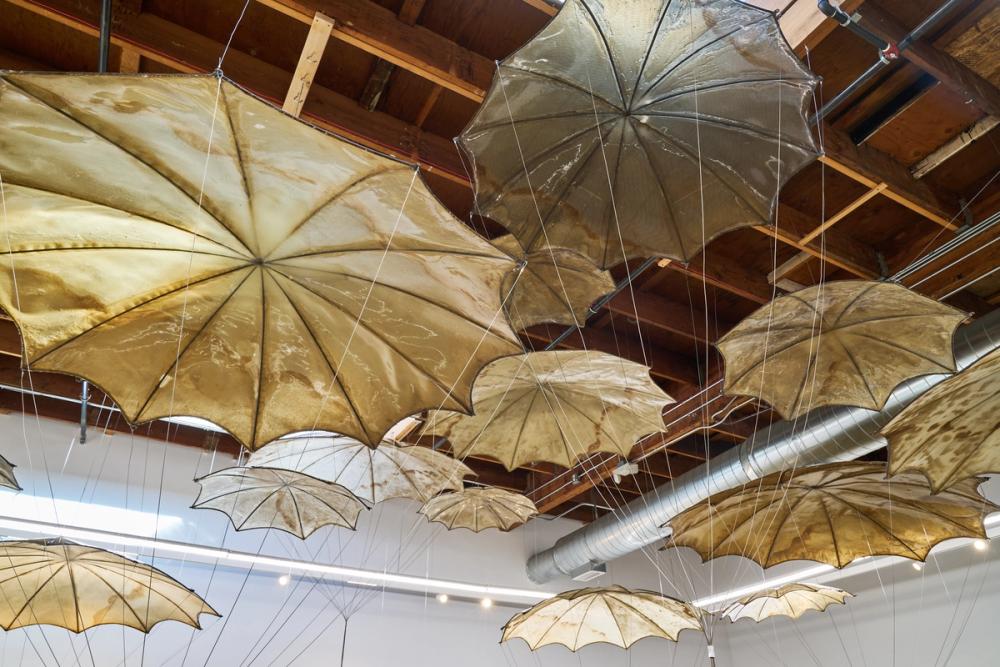
Greeting the viewer at the gallery entrance is Batputto, Pels’ anthropomorphized cherub — a Classical putto figure sculpted in wax from a baby doll, fitted with bat wings and blowing a shofar-like horn fashioned from the artist’s own scarves. Above these infant forms, seventeen steel and fiberglass parachutes of varying scales drift through the room like clouds amassing in a darkening sky. The gesture of rescue and shelter the parachutes invoke assumes a more ominous register when read against the looming memory of the 2025 LA fires. Encountering Terranova Redux summons the impulse to shield precious and fragile life forms from harm even as destruction gathers at its edges.
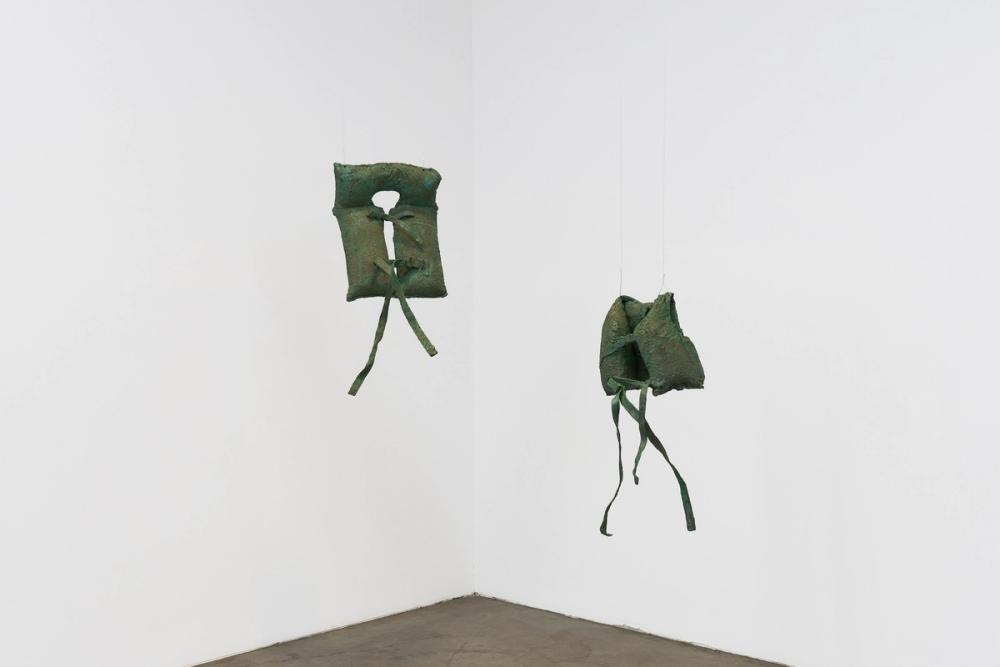
To restage Terranova thirty-one years later, Pels returned to her sculptures for the first time to undertake the restoration process. She discovered that the fiberglass and resin had yellowed with age and accumulated dust and grime from three decades of storage in her Greenpoint loft/studio. Darkened rings stain the fiberglass where water had pooled inside the chutes during winters when the studio ceiling leaked, becoming traces of time made material, frozen like insects in amber. Rather than erase these marks in pursuit of the works’ original appearance, Pels painstakingly cleaned and refinished each parachute while honoring what the years had done to them. In doing so, she recast the material’s slow deterioration not as damage to be undone, but as an accrued layer of meaning, one that finds a quiet resonance with the ecological ruin and relentless violence that define our present moment. Accompanying Terranova in the gallery are two cast bronze life jackets from the contemporaneous series Triage (1995). The title invokes the emergency medical protocol by which casualties are prioritized according to urgency. Rendered in dense bronze and suspended as though falling from the sky, the buoyant has become inert, the promise of rescue undone by the very weight of its form.
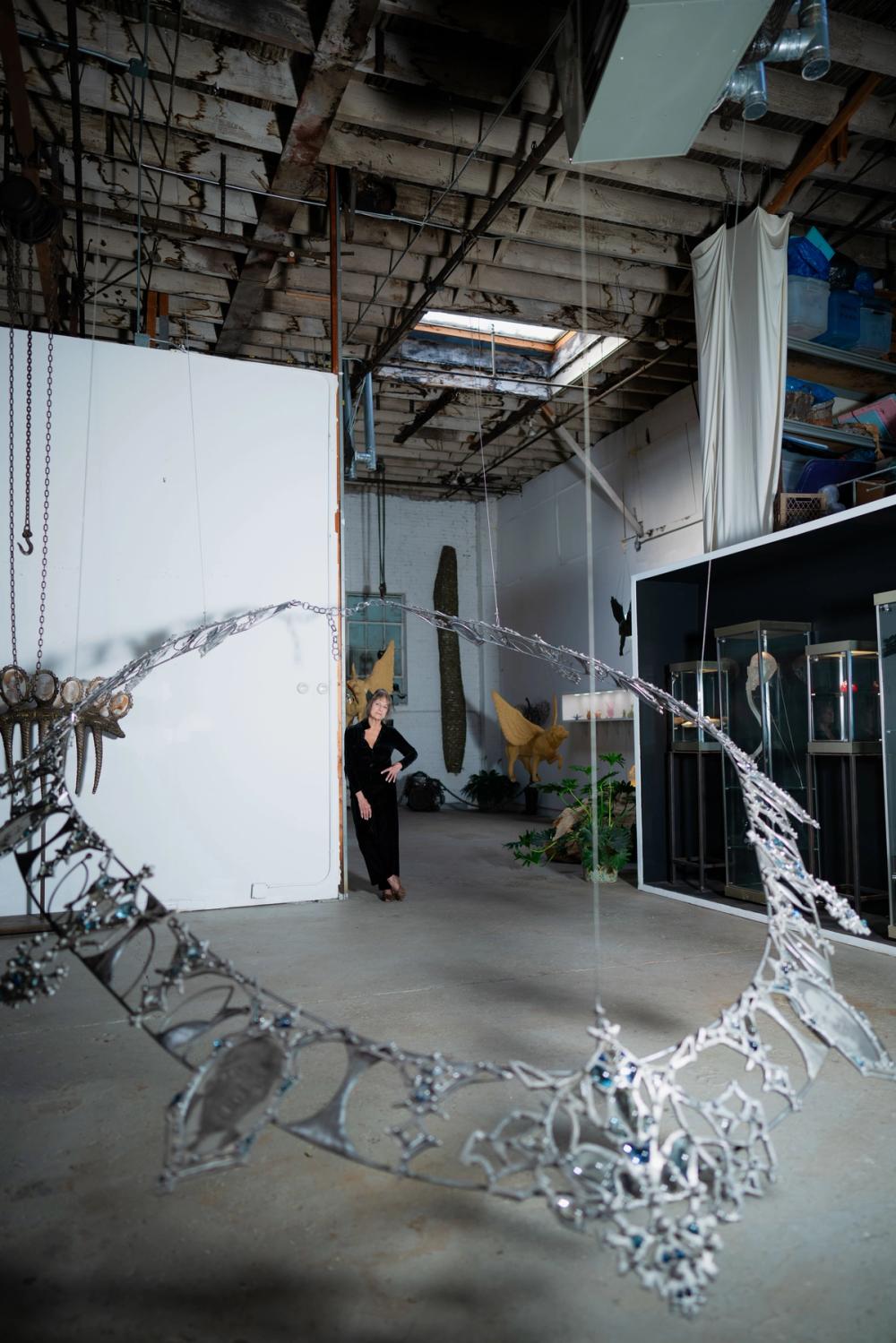
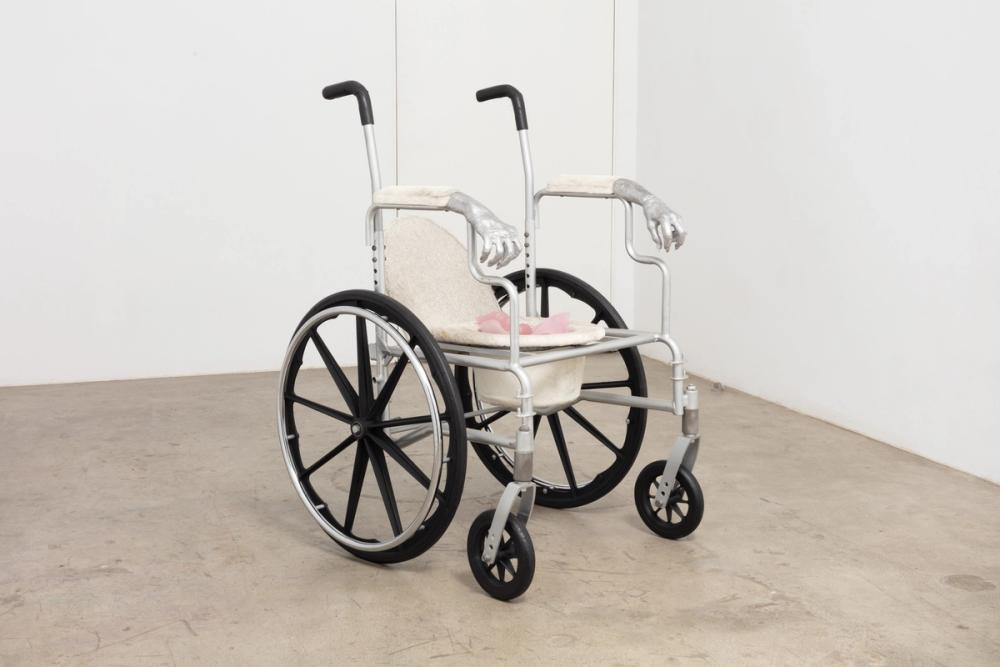
The final sculpture in Terranova Redux belongs to Pels’ most recent body of work. Occupying the small gallery, Madonna il Invecchiamento (2020–23) is one of four iterations in the Madonna series, through which Pels explored the icon of Madonna imagery she became immersed in during her years in Italy. These works are meditations on feminine identity within the political climate of the 2020s. The impetus for Madonna Il Vecchiamento (Italian for “aging” or “worn out”) emerged from a series of surgeries Pels underwent as her body began to bear the accumulated toll of decades of physical studio labor: first an operation on her right hand, then a hip replacement, and finally spinal surgery. Surrounded by the medical equipment she had gathered in her loft — a wheelchair, a porta-potty later upholstered in deer hide — she dreamt of dismantling these symbols of infirmity and welding them into something new: a singular, dual-functioning contraption that refused their original meaning. Before each surgery, she made casts of her body: her arthritic hands rendered in aluminum before her first operation, a pink glass coccyx cast before her hip replacement. What emerged from this process was a surreal hybrid of demoralizing medical apparatus transformed into an anthropomorphic body, at once machine and self. The work gives form to a profound and unsettling truth: that illness strips away the illusion of separation between person and body, revealing that we are, at our most vulnerable, simply machines that have ceased to function as intended.
Taken together, the works in Terranova Redux form a meditation on endurance of materials, of bodies, of survival itself. Whether tracing the slow yellowing of resin across 31 years, the deadened weight of a life jacket that can no longer save, or the jarring aftermath of a body altered by surgery, Pels finds in deterioration not an ending but a transformation. Her practice asks us to sit with what remains when time, labor, and vulnerability have had their way and to recognize in those residues something still vital, still prescient.
Exhibition documentation by Josh Schaedel & Indah Datau